Case Study: EOL Tester with Integrated Vision Inspection

Problem A Tier-2 automotive components manufacturer was struggling with quality assurance in their final assembly line. The products — connectors and harness assemblies — were going through manual end-of-line checks that relied heavily on operator visual inspection and basic functional testing. This led to: Inconsistent defect detection High reliance on skilled inspectors Missed defects slipping[…]
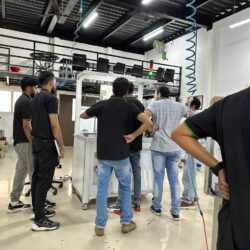
Case Study: EV Inlet Harness Assembly Line (HV Application)

Problem An EV manufacturer producing high-voltage inlet harnesses was facing increasing challenges in maintaining consistent quality and throughput. The assembly process involved multiple critical steps such as wire routing, terminal insertion, and component verification. As production volumes increased, manual assembly methods began to expose quality risks, operator dependency, and inspection bottlenecks, especially for safety-critical HV[…]

Smart Cable Feeding: Reducing Downtime & Costs

Auto-ancilliary companies — especially those supplying wire-harnesses, cables, connectors and assemblies to OEMs — face mounting pressure to deliver higher volumes, shorter lead-times, consistent quality, and lower costs. At the same time they must manage more complex harnesses, multiple variants, high automation demands, and the risk of downtime due to material handling or feeding issues.[…]

High-Efficiency Shrink Sleeve Heating Solution for Auto-Ancillaries

In today’s automotive supply chain, auto-ancillary companies (wire-harness manufacturers, connector suppliers, switch/relay makers) face increasing demands: higher volumes, tighter tolerances, more variant complexity, stricter quality & traceability standards, and constant cost-pressure. Specifically, when applying heat-shrink sleeves on wiring harnesses and connectors, manufacturers are challenged by: inconsistent shrink results (uneven heating causing rework) long cycle times[…]

Enhancing Cable Reliability with the Bending & Torsion Test Setup

A leading automotive wiring harness manufacturer faced recurring challenges during cable validation. Their cables undergo continuous bending and twisting in real-world environments—inside vehicle doors, dashboards, tailgates, steering systems, and various other moving mechanisms.However, their existing testing methods were manual, inconsistent, and time-consuming, resulting in: Delayed product approvals Higher testing costs Frequent cable failures due to[…]

Understanding Relays: Their Importance, Advantages, Disadvantages, and How to Troubleshoot Them

Relays are fundamental components in many electrical systems, providing an efficient and reliable means of controlling circuits. This blog explores the role of relays, why they are essential, how they work, the common issues they face, troubleshooting techniques, and the different types of relay testers available. Importantly, relay testing typically occurs after the manufacturing process[…]

Infrastructure for Wire Harness Manufacturing

To manufacture wire harnesses efficiently, several essential elements must be in place. Start with a dedicated workspace equipped with the appropriate machines and tools. Use high-quality materials to ensure durability and reliability in the final product. A skilled and well-trained team is vital for smooth and accurate operations. Implementing strict quality control measures helps maintain[…]

Top 4 Mistakes to Avoid When Using a Relay Load Tester

Relay load testing is an indispensable aspect of ensuring the reliability and performance of electro-mechanical switching devices. With the advent of advanced solutions like the enProducts® Relay Load Tester, manufacturers can streamline their testing procedures and enhance the quality of automotive relays. However, even with sophisticated testing equipment at hand, there are common mistakes that[…]

factory acceptance test FAT at enProducts

Factory Acceptance Test (FAT) and Its Operational Mechanisms

What is Factory Acceptance Test (FAT) ? Factory Acceptance Test (FAT) is a meticulous process employed by machine manufacturers to subject their products to rigorous testing before delivery. The primary aim is to ensure precise alignment with customer specifications, a crucial step facilitated by EnProducts through essential FAT services. Factory Acceptance Test (FAT) is a pivotal[…]

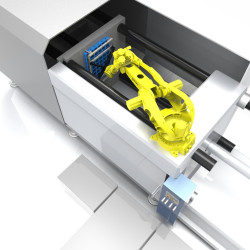
Robot Part Picking from IMM (Heavy load)

enProducts Pvt Ltd proudly announces the successful completion of a 6-axis industrial robotic system for picking and placing injection-molded parts. The project involved handling a 25 kg molded component from a 3200-ton injection molding machine, using a lightweight aluminum profile claw module combined with compact gripping technology. This complex task was made possible with the[…]

Need help?